Strep Throat vs. Sore Throat: When Do You Need a Rapid Test?
A sore throat can start as a mild scratch in the morning and become painful enough by evening that swallowing dinner hurts. When that happens, one question usually comes next:
Is this strep throat, or just a regular sore throat?
Quick Answer
Most sore throats are caused by viruses and do not require antibiotics. Strep throat is a bacterial infection caused by group A Streptococcus. A rapid strep test may be appropriate when you have symptoms such as sudden sore throat, fever, painful swallowing, swollen neck glands, or inflamed tonsils without obvious cold symptoms such as cough or runny nose.
For families in Rosenberg, Richmond, Sugar Land, and surrounding Fort Bend County communities, knowing when a rapid strep test is worthwhile can help avoid unnecessary antibiotics while making sure true strep infections receive appropriate treatment.
Strep Throat vs. Sore Throat: What Is the Difference?
A sore throat is a symptom, not a specific diagnosis.
It means your throat feels painful, irritated, dry, or scratchy. Many different conditions can cause a sore throat, including:
- Common cold viruses
- Influenza
- COVID-19
- Other respiratory viruses
- Allergies
- Dry air
- Smoke or other irritants
- Group A strep bacteria
Strep throat is one specific cause of a sore throat.
Strep throat is a bacterial infection of the throat and tonsils caused by group A Streptococcus, also called group A strep or GAS.
Viruses cause most sore throats. According to the CDC, group A strep accounts for approximately 20% to 30% of pharyngitis in children and 5% to 15% in adults.
That distinction matters because antibiotics treat bacterial strep throat but do not treat viral sore throats.
Strep Throat vs. Viral Sore Throat: Quick Comparison
| Symptom | Strep Throat | Viral Sore Throat |
|---|---|---|
| Sudden sore throat | Common | Possible |
| Painful swallowing | Common | Common |
| Fever | Common | Possible |
| Red or swollen tonsils | Common | Possible |
| White patches on tonsils | Possible | Possible |
| Tender neck glands | Common | Possible |
| Cough | Usually absent | Common |
| Runny nose | Usually absent | Common |
| Hoarseness | Uncommon | Common |
| Pink eye | Uncommon | Can occur |
| Rapid strep test may be needed | Often, depending on evaluation | Usually not when clear viral symptoms are present |
Symptoms can overlap, so this comparison should not be used to diagnose strep throat at home.
What Are the Symptoms of Strep Throat?
Strep throat often follows a somewhat different pattern from a typical cold.
Possible strep throat symptoms include:
- A sore throat that begins quickly
- Pain when swallowing
- Fever
- Red or swollen tonsils
- White patches or pus on the tonsils
- Swollen or tender lymph nodes in the front of the neck
- Tiny red spots on the roof of the mouth
- Headache
- Nausea, vomiting, or stomach pain, particularly in children
A scarlet-fever-type rash can also occur with group A strep infection.
One useful clue is what is not present.
Classic strep throat usually does not cause the runny nose and persistent cough commonly seen with viral respiratory infections.
Do White Patches on the Tonsils Mean You Have Strep?
No.
White patches or tonsillar exudate can occur with strep throat, but throat appearance alone cannot reliably confirm the diagnosis.
Other infections can produce similar findings.
A healthcare provider considers several factors together, including:
- Your symptoms
- Physical examination
- Age
- Recent exposure to strep
- Other illnesses circulating in the community
- Diagnostic testing when appropriate
Which Symptoms Suggest a Viral Sore Throat?
Certain symptoms make a viral infection more likely than classic strep throat.
These include:
- Cough
- Runny nose
- Nasal congestion
- Hoarseness
- Pink eye or conjunctivitis
For example, someone with a scratchy throat, significant nasal congestion, cough, and hoarse voice is more likely to have a viral respiratory infection than classic group A strep.
Current CDC guidance indicates that patients with clear viral symptoms generally do not need testing for group A strep.
However, symptoms should be considered together rather than using one symptom to make a diagnosis.
Can Flu or COVID-19 Cause a Sore Throat?
Yes.
Influenza, COVID-19, the common cold, and other respiratory infections can all cause sore throat.
Flu may also cause:
- Fever
- Body aches
- Headache
- Fatigue
- Cough
COVID-19 may cause:
- Sore throat
- Congestion
- Cough
- Fever
- Fatigue
- Other respiratory symptoms
Depending on your symptoms and current respiratory illness patterns, a healthcare provider may consider testing for flu, COVID-19, RSV, strep throat, or another infection.
This can be particularly useful during respiratory virus season when several illnesses may be circulating at the same time.
Who Is Most Likely to Get Strep Throat?
Anyone can develop strep throat, but it is particularly common among school-age children.
Children between 5 and 15 years old are the age group most commonly affected. Strep throat is uncommon in children younger than 3.
Close contact also increases the chance of exposure.
Risk may be higher when someone has:
- A household member with confirmed strep
- Close exposure at school
- Exposure in childcare
- Frequent close contact in crowded settings
Parents often notice this pattern when one child tests positive for strep and another child develops a sore throat several days later.
Group A strep pharyngitis typically develops approximately two to five days after exposure.
However, exposure alone does not mean that every new sore throat is strep.
When Do You Need a Rapid Strep Test?
A rapid strep test is most useful when your symptoms and examination make group A strep reasonably possible but obvious viral symptoms are not present.
You may be more likely to need a rapid strep test when:
- Your sore throat started suddenly
- Swallowing is painful
- You have a fever
- Your tonsils are red or swollen
- You have white patches or tonsillar exudate
- The lymph nodes in the front of your neck are swollen or tender
- You do not have an obvious cough or runny nose
- Someone in your household recently had confirmed strep and you now have compatible symptoms
Updated Infectious Diseases Society of America guidance recommends using clinical scoring systems as part of deciding who should be tested for group A strep.
These systems may consider factors such as:
- Fever
- Tonsillar swelling or exudate
- Tender neck lymph nodes
- Absence of cough
- Age
Their main purpose is to help clinicians identify people at low risk of strep who are unlikely to benefit from unnecessary testing.
Patients should not rely on an online score to diagnose themselves. A healthcare professional can combine clinical findings with your medical history, exposure risk, examination, and individual circumstances.
When Might You Not Need a Strep Test?
If symptoms strongly suggest a virus, strep testing may provide little benefit.
For example, a sore throat accompanied by:
- Cough
- Runny nose
- Hoarseness
- Conjunctivitis
strongly suggests a viral infection.
The goal is not to test every sore throat.
The goal is to test the right patients.
What Happens During a Rapid Strep Test?
A rapid strep test is relatively simple.
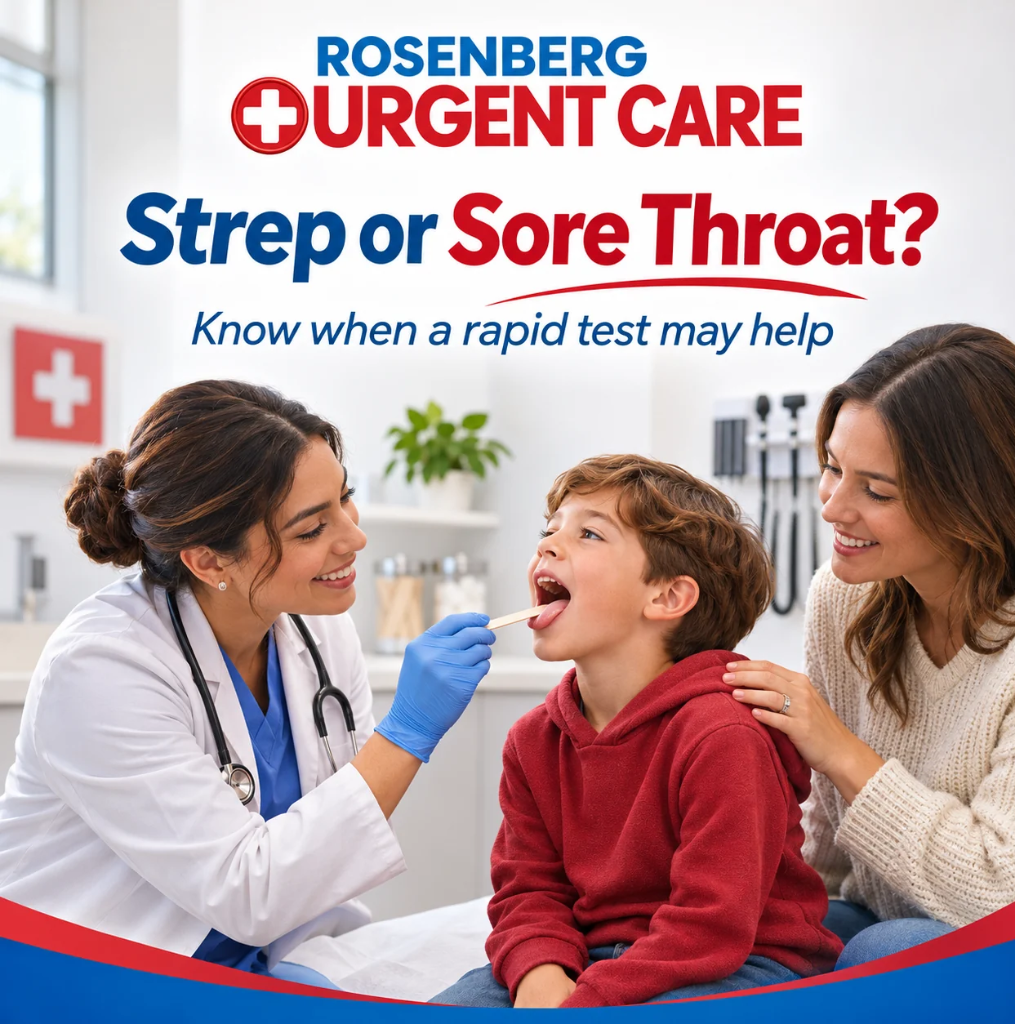
A healthcare professional gently swabs the tonsils and back of the throat to collect a sample.
The procedure may cause brief gagging or discomfort, particularly in children, but collecting the specimen usually takes only a few moments.
The sample is then tested for group A strep bacteria.
How Fast Are Rapid Strep Test Results?
Rapid antigen detection tests, often called rapid strep tests, can provide results much faster than a traditional throat culture.
A positive rapid strep test can confirm group A strep pharyngitis, allowing appropriate treatment to begin without waiting for a traditional culture.
At Rosenberg Urgent Care, rapid testing and on-site laboratory services make same-day evaluation practical when a painful sore throat needs more than home care.
What Does a Negative Rapid Strep Test Mean?
A negative rapid strep test does not always mean exactly the same thing for children and adults.
Negative Rapid Strep Test in Children
Rapid antigen tests are useful, but they can occasionally miss group A strep.
For symptomatic children older than 3 years, CDC guidance recommends following a negative rapid antigen test with a throat culture.
Why?
A throat culture can detect infections that may have been missed by the rapid test. Confirming true strep infections in children also helps reduce the risk of complications such as acute rheumatic fever.
So, for a symptomatic child:
A negative rapid strep test may not always end the evaluation.
A backup throat culture may be appropriate.
Negative Rapid Strep Test in Adults
For adults, a throat culture after a negative rapid strep test is usually not routinely necessary.
One reason is that acute rheumatic fever is very rare in adults.
A healthcare provider may still recommend additional testing or evaluation depending on the patient’s symptoms and clinical circumstances.
What If the Throat Culture Is Negative?
If a properly obtained throat culture is negative for group A strep, group A strep is not causing the sore throat, and antibiotics are not needed to treat strep.
Other possible causes may then be considered depending on the patient’s symptoms.
How Is Confirmed Strep Throat Treated?
Confirmed strep throat is treated with antibiotics.
Penicillin or amoxicillin is commonly used as first-line treatment for many patients, with alternatives available when appropriate for people with certain penicillin allergies.
The exact medication, dose, and treatment plan depend on factors such as:
- Age
- Weight
- Allergy history
- Medical conditions
- Other medications
- Clinical circumstances
Why Are Antibiotics Used for Strep Throat?
Appropriate antibiotic treatment can:
- Shorten symptoms
- Reduce transmission to other people
- Reduce the risk of complications
Why Not Take Antibiotics “Just in Case”?
Because antibiotics do not treat viral infections.
Taking antibiotics for a viral sore throat exposes patients to potential medication side effects without treating the underlying illness and contributes to antibiotic resistance.
A better approach is:
Test when appropriate. Treat confirmed strep. Avoid unnecessary antibiotics for viral illnesses.
What Can You Do at Home for a Sore Throat?
Whether you have a viral sore throat or are recovering from treated strep throat, supportive care may help make swallowing and resting more comfortable.
Helpful measures may include:
- Drinking plenty of fluids
- Drinking warm liquids such as broth or caffeine-free tea
- Trying cold drinks or ice pops
- Gargling with warm salt water when old enough to do so safely
- Using a humidifier
- Resting
- Using appropriate over-the-counter pain or fever medicine when safe for you
Honey may help soothe coughing or throat irritation in adults and children older than 1 year.
Do not give honey to babies younger than 12 months.
Smoking and secondhand smoke can further irritate an already inflamed throat and should be avoided.
If symptoms continue to worsen rather than improve, home treatment should not replace medical evaluation.
How Can You Prevent Strep Throat From Spreading?
Group A strep can spread through respiratory droplets, secretions, and close contact.
Basic hygiene can help reduce transmission:
- Wash your hands regularly
- Cover coughs and sneezes
- Avoid sharing cups or eating utensils
- Limit close contact with others while actively ill
A person with confirmed strep throat should generally remain home from work, school, or daycare until:
- They are fever-free, and
- They have been taking appropriate antibiotics for at least 12 to 24 hours
Children should also feel well enough to participate normally before returning to school or childcare.
If symptoms are not beginning to improve after approximately 48 hours of antibiotic treatment, contact your healthcare provider.
When Should You Visit Urgent Care for a Sore Throat?
Many mild viral sore throats improve without medical treatment.
However, urgent care can be useful when symptoms are significant, the diagnosis is uncertain, or testing could change treatment.
Consider a same-day urgent care evaluation for:
- Significant pain when swallowing
- Sudden or severe sore throat
- Fever with sore throat
- Swollen or tender neck glands
- Red or swollen tonsils
- White patches on the tonsils
- Known strep exposure followed by symptoms
- Sore throat accompanied by a new rash
- Symptoms that are worsening rather than improving
- Recurrent sore throats
- Concern that your child may have strep
- Need for rapid strep testing
- Possible flu, COVID-19, RSV, or another respiratory infection
- Signs of dehydration
- Persistent symptoms
At Rosenberg Urgent Care, walk-ins are welcome for same-day evaluation. On-site laboratory and rapid testing can help determine whether a painful throat may require treatment for strep or is more consistent with a viral illness requiring supportive care.
For families in Rosenberg, Richmond, Sugar Land, Pecan Grove, Beasley, and surrounding Fort Bend County communities, urgent care can provide an option for evaluating non-life-threatening sore throat symptoms without automatically going to the emergency room.
When Does a Sore Throat Need Emergency Care?
Most sore throats do not require emergency-room treatment.
However, a throat problem can occasionally affect breathing, swallowing, or hydration or indicate a more serious infection.
Call 911 or go to the nearest emergency room when appropriate if someone has:
- Significant difficulty breathing
- Inability to swallow saliva
- Severe drooling because swallowing is impossible
- Severe or rapidly increasing swelling of the throat or neck
- Blue, gray, or very pale skin or lips
- Severe dehydration
- Confusion or inability to stay awake
- A rapidly worsening condition that appears life-threatening
A baby younger than 3 months with a temperature of 100.4°F (38°C) or higher also requires prompt medical evaluation.
Do not wait for a rapid strep test if someone is having difficulty breathing.
Key Takeaways: Strep Throat vs. Sore Throat
- Most sore throats are caused by viruses rather than strep bacteria.
- Strep throat is particularly common among children ages 5 to 15.
- Sudden sore throat, fever, painful swallowing, swollen neck glands, and inflamed tonsils can suggest strep.
- Cough, runny nose, hoarseness, and pink eye are more suggestive of a viral infection.
- White patches alone cannot confirm strep throat.
- Symptoms alone cannot always distinguish viral sore throat from strep.
- A rapid strep test can quickly detect group A strep when testing is clinically appropriate.
- Symptomatic children older than 3 may need a throat culture after a negative rapid test.
- Adults generally do not routinely need a throat culture after a negative rapid strep test.
- Antibiotics should be used for confirmed strep throat, not routine viral sore throats.
- Difficulty breathing or inability to swallow requires more urgent medical attention.
Frequently Asked Questions About Strep Throat and Rapid Testing
Can You Tell Strep Throat by Looking at It?
Not reliably.
Red tonsils, swelling, and white patches may occur with strep throat, but other infections can look similar. When strep is clinically possible and clear viral symptoms are absent, diagnostic testing may be necessary.
Does a Cough Mean It Is Not Strep Throat?
Not necessarily.
A cough makes a viral infection more likely because classic group A strep pharyngitis usually does not cause cough. However, a single symptom should not be used to completely diagnose or exclude strep throat.
When Should I Get a Rapid Strep Test?
Rapid testing may be useful when symptoms such as sudden sore throat, fever, painful swallowing, tender neck glands, or inflamed tonsils make strep reasonably possible and obvious viral symptoms are absent.
A healthcare provider can determine whether testing is appropriate after considering your symptoms, examination, age, exposure history, and individual risk factors.
How Long Does a Rapid Strep Test Take?
Rapid antigen strep tests can provide results considerably faster than a traditional throat culture. The throat swab itself takes only a few moments. The exact turnaround time depends on the testing method and facility.
What Happens If My Child’s Rapid Strep Test Is Negative?
For symptomatic children older than 3, CDC guidance recommends confirming a negative rapid antigen test with a throat culture.
If the backup culture later confirms group A strep, appropriate antibiotic treatment can then be started.
Do Adults Need a Throat Culture After a Negative Rapid Strep Test?
Usually not.
Routine backup throat cultures generally are not recommended for adults after a negative rapid antigen test because acute rheumatic fever is very rare in adults.
Your healthcare provider may recommend additional evaluation based on your individual circumstances.
Can Strep Throat Go Away Without Antibiotics?
Symptoms may eventually improve, but confirmed group A strep should be treated with appropriate antibiotics. Treatment can shorten symptoms, reduce transmission, and decrease the risk of certain complications.
How Soon Can My Child Return to School After Strep Throat?
A child with confirmed strep should generally be fever-free and have received appropriate antibiotic treatment for at least 12 to 24 hours before returning.
The child should also feel well enough to participate in normal school activities.
Can a Sore Throat Be Flu or COVID-19 Instead of Strep?
Yes.
Influenza, COVID-19, common cold viruses, and other respiratory infections can cause sore throat. Symptoms such as cough, congestion, body aches, fever, and fatigue may lead a healthcare provider to consider testing for other respiratory infections in addition to strep.
Where Can I Get a Rapid Strep Test in Rosenberg, TX?
Patients with sore throat symptoms can visit Rosenberg Urgent Care for same-day evaluation. Depending on your symptoms and clinical assessment, rapid testing may be performed when medically appropriate.
Get Same-Day Sore Throat and Strep Testing in Rosenberg, TX
A painful throat does not automatically mean you have strep, and white spots on your tonsils do not automatically mean you need antibiotics.
The most useful distinction between strep throat vs. a sore throat comes from the full clinical picture:
- How quickly symptoms began
- Whether fever is present
- Whether you have cough or congestion
- Your age
- Recent exposure to confirmed strep
- Your throat examination
- Appropriate diagnostic testing
A rapid strep test can provide an answer quickly when strep is genuinely suspected. Just as importantly, knowing when testing is unnecessary can help prevent inappropriate antibiotic treatment for viral illnesses.
If you or your child develops a painful sore throat, fever, swollen glands, or symptoms that are not improving, visit Rosenberg Urgent Care for a same-day evaluation and rapid testing when clinically appropriate.
Rosenberg Urgent Care
3310 1st Street, Suite 7
Rosenberg, TX 77471
Phone: (281) 762-1950
Medical Disclaimer
This article is for general educational purposes only and is not medical advice, diagnosis, or treatment. It does not create a provider-patient relationship. Do not delay professional medical care because of information on this page. Call 911 or go to the nearest emergency room for severe or life-threatening symptoms. Available services, testing, treatment, and insurance participation may vary by location and clinical evaluation. No specific outcome or insurance coverage is guaranteed.